
How Distortion Becomes Emotion
The Relationship Between Cognitive Distortion and Emotion

Hello, this is Hyoju.
Today, I finished a new novel and sent it off to a publisher. After putting the final period on the page, what came first wasn’t joy, but a strange sense of emptiness. I found myself wondering what to do with the remaining days of February, feeling momentarily adrift.
So today, I’d like to talk about a theme that often appears in my fiction: cognitive distortion.
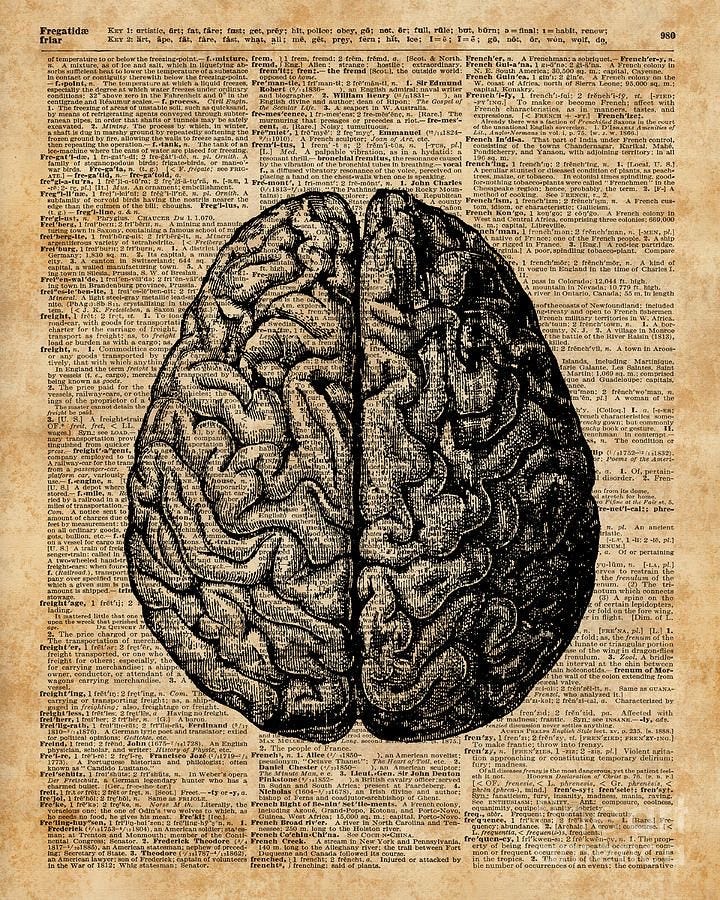
For a long time, “emotion” and “reason” have been regarded as two distant and separate realms.
Philosophers like Socrates and Immanuel Kant argued that what humans should follow is not emotion, but reason.
But I don’t think the distinction is that simple.
At times, emotion overwhelms reason; at other times, reason governs emotion.
Rather than being opposites, perhaps they are forces that intrude upon and influence each other.
If either one fails to function properly,
we may not be able to exist as whole human beings.
Many of my stories begin from this tension.
A woman in her twenties with perfectly sound cognitive abilities becomes distorted in her thinking after just a few careless words, and struggles in confusion and anguish — The Position of the Rib.
A young man preparing for employment finds his cognitive functions collapsing under unbearable pressure — It’s Okay to Be Nothing, a story about youth dementia.
Or stories about people who become so absorbed in what they believe are the necessary conditions for marriage — money, status, even love — that they lose sight of their own hearts.
I don’t see cognitive distortion as merely a psychological term. To me, it is a small fracture that forms when someone’s words, social standards, or relational expectations quietly seep into a person’s inner world. And that fracture often shakes an entire life.
Perhaps we do not fall apart because of emotion itself, but because we mistake distorted cognition for emotion.
So how, then, are cognitive distortions connected to emotion?
We tend to think of emotion as a result. We believe we feel sad because something sad happened, or angry because something angering occurred.
But between the event and the feeling, there is a process: interpretation.
When we hear certain words, when we encounter certain situations, we do not receive them as they are. We interpret them through our memories, wounds, expectations, and fears.
And that interpretation is cognition.
The problem is that cognition is not always accurate.
“I was disrespected.”
“I’m not good enough.”
“This will definitely end in failure.”
These thoughts are interpretations, not facts. Yet we often accept them as truth. And in that moment, emotion is formed upon that distorted cognition.
Distorted cognition gives birth to distorted emotion.
And that emotion, in turn, reinforces the cognition.

I feel anxious,so the situation must be bad.
If the situation is bad, I become even more anxious.
In this way, emotion and cognition amplify each other, forming a self-sustaining loop.
The characters I want to portray in my fiction are not simply “emotional” people. They are people who cannot doubt their own cognition. People who fail to recognize distortion as distortion, and instead accept it as the truth of the world.
And so I ask:
Is the sadness we feel truly caused by reality itself, or by the lens through which we perceive it?
Perhaps maturity is not about eliminating emotion, but about questioning our own cognition.
“To what thought does this feeling trace back?”
Rather than suppressing emotion, to follow it down to its roots.
That is where my stories begin.